Oh, wattle we do, now?
On stopping to love the flowers in a world on fire
I'm riding home from a meeting. My mind is bouncing around between what we just discussed that I need to get on with doing and some annoying bureaucracy I have to push through so I can get paid for a different piece of work. I'm pedalling hard uphill so my commute can double as decent cardio exercise, and my heart is also still racing because of an appalling thing I saw when I stupidly opened social media before jumping on my bike and part of my brain is planning what to say about it and...
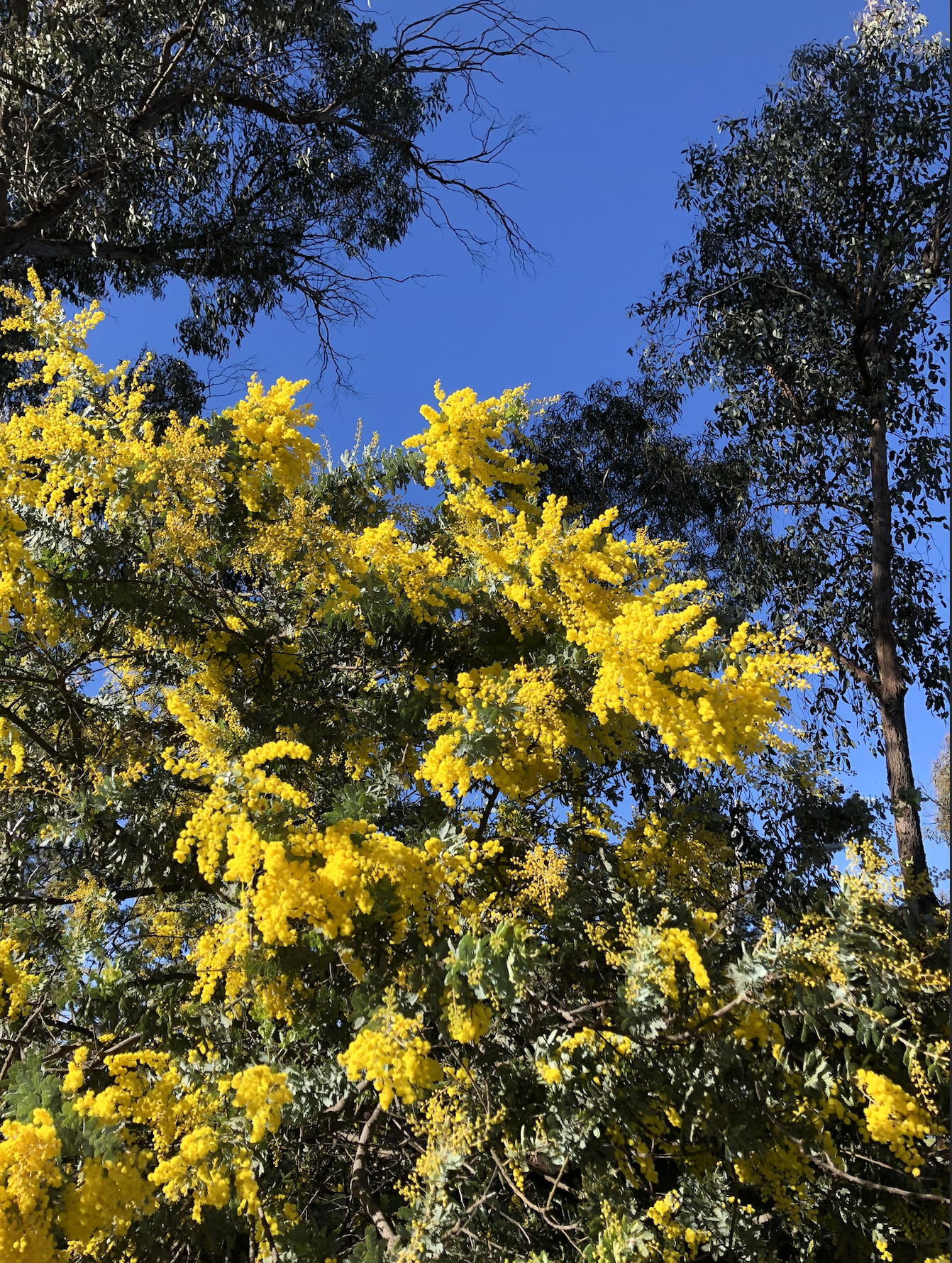
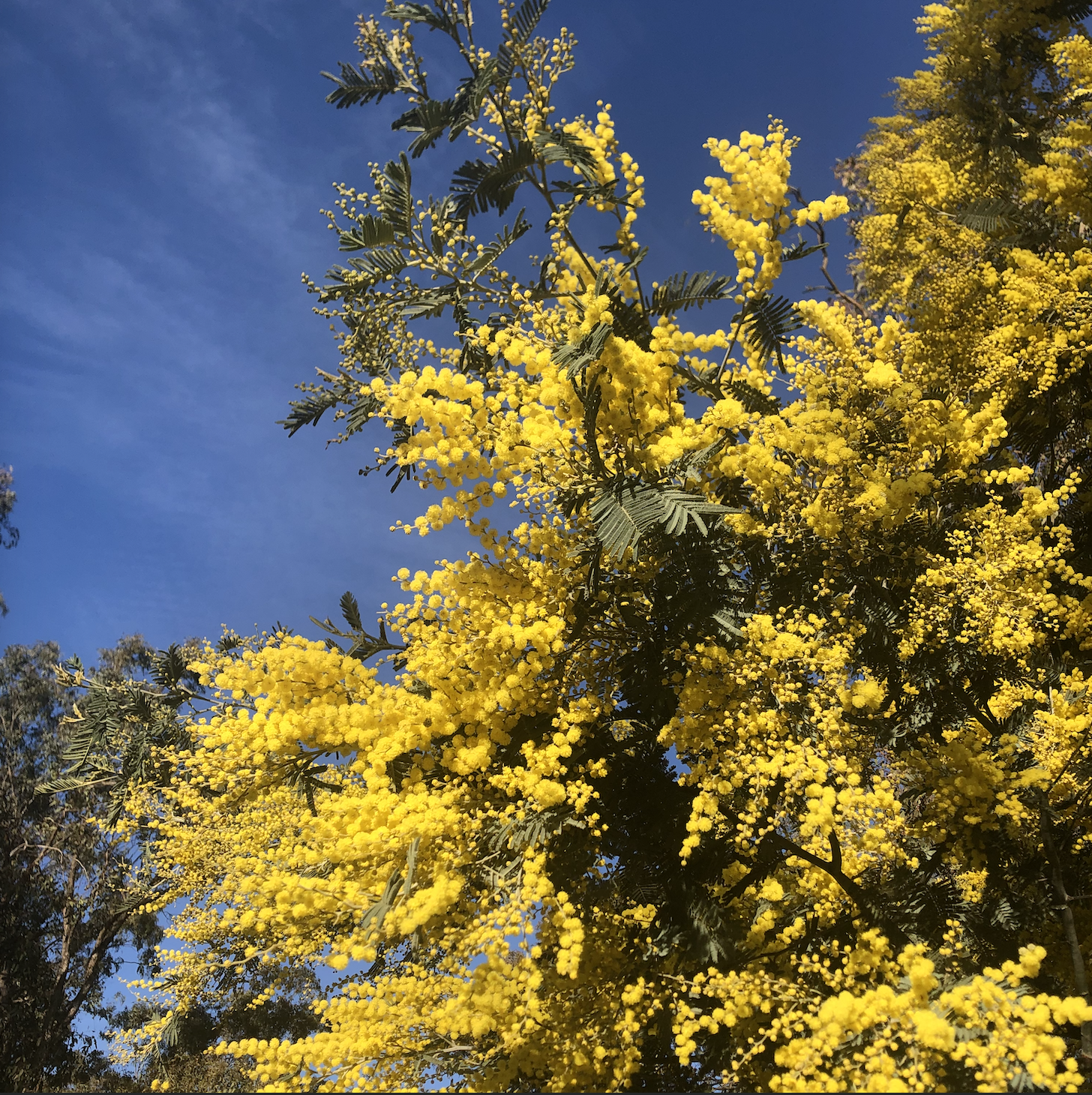
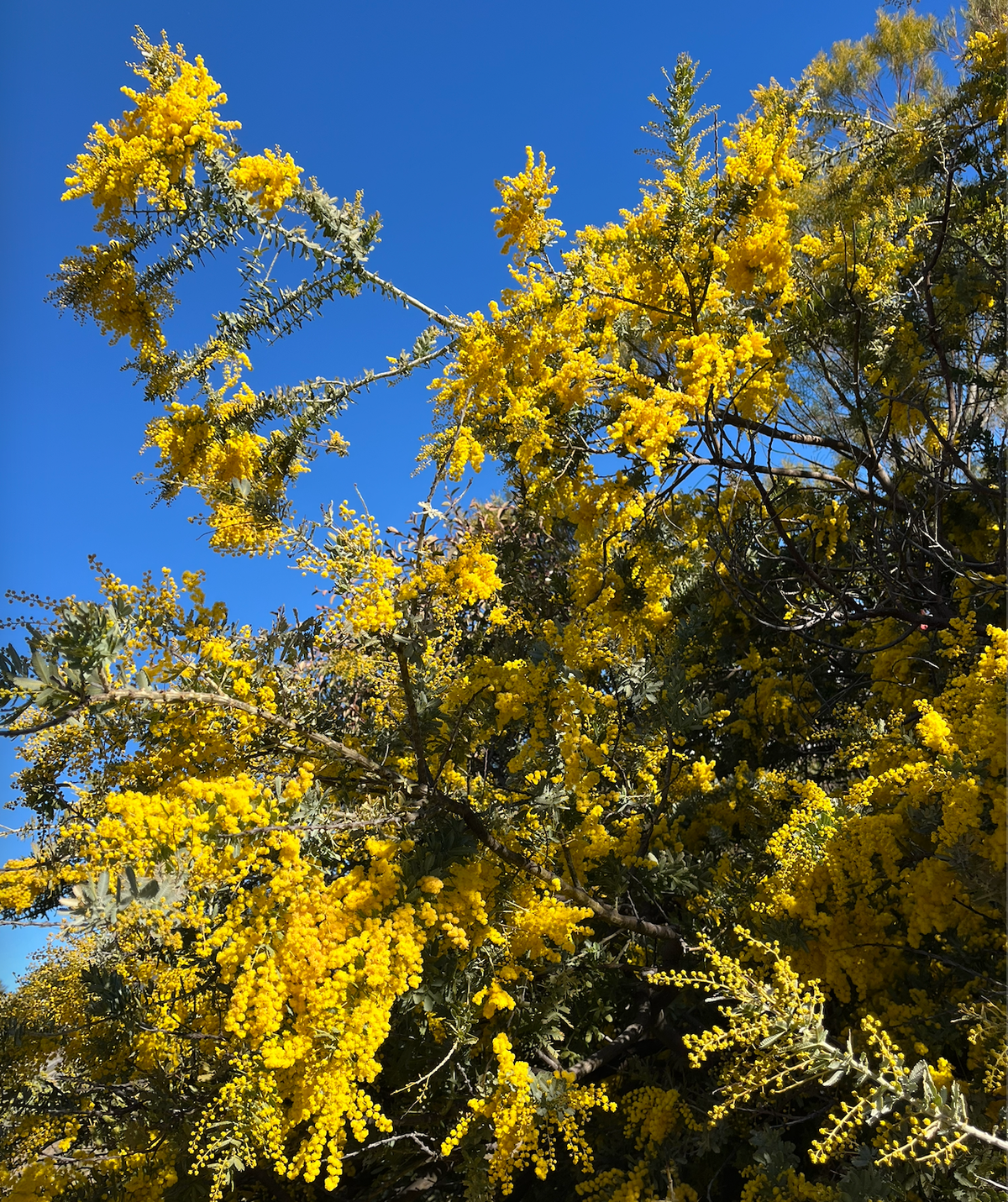
... and a flash of gold catches my eye.
I brake. Put my foot down.
Breathe out gently. Breathe in deeply.
I break into a cheesy grin at the sheer ostentatious beauty of it - this audaciously bright yellow against the deep blue Canberra sky.
And then it occurs to me... It's not even the end of June.
This is wrong. Oh so wrong. It should be deep winter, but we've barely had a frost. It should be a good month before the wattle begins to signal the approaching spring.
The joy and the grief interweave as they slide through my body. They create something else in me and with me. I'm not sure what, yet. The germ of something. Also a stopper - I've barely finished writing anything since. But things are slowly fermenting inside.
Now, six weeks later, with all the Cootamundra and golden and silver wattles shining their glory, I think I finally have something to say about how this magnificent being dares us to love the world, even in its brokenness, even in times so out of joint.
**
There's something about wattle in full flower that takes my breath away.
And no, I'm not allergic. Thank goodness. I can stand right there and bask in its fuzzy sunshine without it making my sinuses implode.
But it does something to my heart.
Bursting into bloom after the darkest of winter, it's a shot of pure happiness between the ribs, jolting me awake.
For years and years now, I've been marking the occasion with an annual picture post and #DadJoke caption: "Wattle we do about this, eh?" Sometimes "Acacia missed it".
So I know it's early.
I'm no botanist. I know there are lots of species, and now various hybrids, flowering at different times, and I can't claim expertise. But I do have my photo record. Often of the same trees I've made friends with over the years.
It's been drifting from the beginning of August to before my birthday in mid/late July. But late June is a jump.
It's a shock. It's just wrong.
**
Climate change screws with time.
In some ways, that might be its most defining feature.
Humans have been marking the flow of time by the seasons for our entire history, and far longer. The predictable cycles tell us when we can collect emu eggs or harvest ripe roots and tubers, when we need to move away from the floodplains up into the mountains, join the migrations, feast with the others, store for the coming dry.
Even though we no longer follow the seasons quite so immediately, we know what to expect deep in our being. We know the times are out of joint.
And, though capitalism thinks it's conquered seasonality, so we can consume avocados and berries all year round, climate disruption is already having major impacts on food security. Ouroboros-like, the abstraction from the cycle of the seasons is coming back to bite us on our own tail.
Digging down into deep time, burning the buried bodies of living beings from 300 million years ago, extractivism has released countless ghosts into today's atmosphere, and they will have their say about our future. Already, they're liberating the ghosts of more recent living beings, bringing a Pandora's Box of possible pathogens out of the melting permafrost.
Melting permafrost - now there's a linguistic paradox fit to make our sense of time go all Salvador Dalí.
Releasing the past in a swift burst, climate change accelerates time, calling the future into question altogether. In its haste, time trips over itself, the past reaching over us directly into the future, with emissions from before we were born locking in impacts for our children, and present actions not able to be felt until the atmosphere catches up, generations from now.
Species can adapt to changing climates. But never before this fast. And the tripped-up time trips up our politics, which is constantly running at breakneck speed without actually going anywhere.
For us environmentalists, the future is now a terrifying spectre of fire and storm. We tell ourselves stories of a better world, but I keep hearing friends and colleagues say some version of "I don't see how this action drives that outcome" or "I don't think we know how we win anymore". Our politics has become a weird nostalgia for the slightly less apocalyptic 1990s, mingling occasionally with old skool Marxism. The urgency of the climate reality counterintuitively drives a strange conservatism, a clinging to strategies and ideas that haven't worked, because we don't have time to stop and think. A pervasive panic underlies it all.
Of course, for coal communities, the future is just as scary and uncertain. Indeed, for most people, kept busy by the demands of late capitalism, the future is a confronting unknown we're told we have to be prepared for. No wonder many are drawn to the attractive dream of an imaginary future and the erasure of an inconvenient and uncomfortable past that the far right are offering. We greenies certainly aren't offering a believable future. Probably because we don't believe it ourselves.
Governments set targets for a distant future. They talk of transition while protecting dying industries. They set up offset schemes to borrow from a future they don't believe in, either, comforted by the economists' discount rates that literally build in assumptions that the future doesn't matter.
Between contested histories and foreclosed futures, trapped in a permanent always/never present, our agency and freedom are stripped away. There's nothing to be done, so we have to just keep doing it harder.
Stop.
Look.
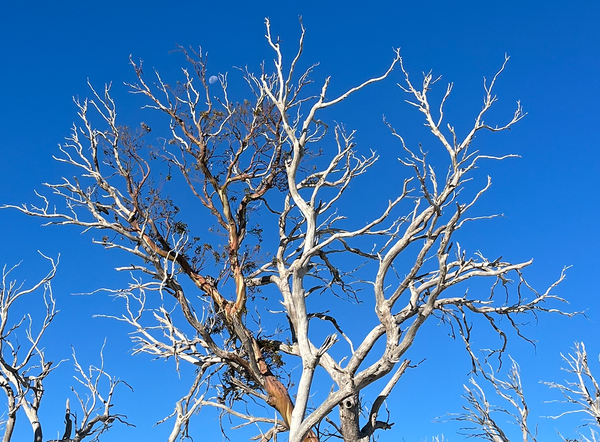
The wattle is blooming.
Stop.
Look.
Breathe.
We can still love this broken world. And that love is a revolutionary act.
**
In 1955 - a mere decade after the war, the holocaust, the nuclear bombing that together irrevocably ruptured history - Hannah Arendt wrote to her friend, Karl Jaspers, that she wanted to call the book she was working on "Amor Mundi" - love of the world.
She was coming to realise, at essentially the same age I am now, that she truly did love the world, and that making the deliberate effort anew each day to love it, despite everything, despite the horrors it had thrown directly at her and all around her, is perhaps the essence of The Human Condition (which became the book's title).
Loving a broken world. Recognising its brokenness and choosing to love it anyway. Loving it without needing to fix it, but deciding to face up to its reality and "think what we are doing" (The Human Condition, p5).
There, in that space, is all of possibility.
If we can embrace it.
There's a phrase of Arendt's from a few years later, in the introductory chapter of Between Past and Future, that has only leapt out at me on a third reading, after also reading so much more thinking about time:
This small non-time-space in the very heart of time, unlike the world and the culture into which we are born, can only be indicated, but cannot be inherited and handed down from the past; each new generation, indeed every new human being as he inserts himself between an infinite past and an infinite future, must discover and ploddingly pave it anew.
The trouble, however, is that we seem to be neither equipped nor prepared for this activity of thinking, of settling down in the gap between past and future. (Between Past and Future, p13)
"Settling down in the gap between past and future"!
Those words stopped me in my tracks like a flash of wattle on a grey day.
Settling down.
We're in the chasm between the no longer and the not yet. "Thought and reality have parted company" (Between Past and Future, p6), and we've lost the thread of tradition, of authority. All around us, people are doing without thinking, playing the role they've been given while imagining they're free, getting carried away on the flood of history, while things are falling apart.
What if we chose to live here, together?
Nice, cozy little chasm. Gemütlich. Let's make it our home.
There's an echo here of Walter Benjamin's "Jetztzeit" - "now time" - interrupting the storm of progress blowing us blindly into a future.
Again, there's an echo in Donna Haraway's "Chthulucene" - a dense, fibrous entanglement of myriad pasts and futures in an ongoing "thick now", where we are called to "stay with the trouble", rather than seek technofixes or cheat codes to get out.
Haraway tells us that "to live and die well as mortal critters in the Chthulucene ... must include mourning irreversible losses. ... Renewed generative flourishing cannot grow from myths of immortality or failure to become-with the dead and the extinct." (Anthropocene, Capitalocene, Plantationocene, Chthulucene: Making Kin, 160-161). "Staying with the trouble" here "requires learning to be truly present, not as a vanishing pivot between awful or edenic pasts and apocalyptic or salvific futures, but as mortal critters entwined in myriad unfinished configurations of places, times, matters and meanings" (Staying with the Trouble, p1).
Settling down between past and future.
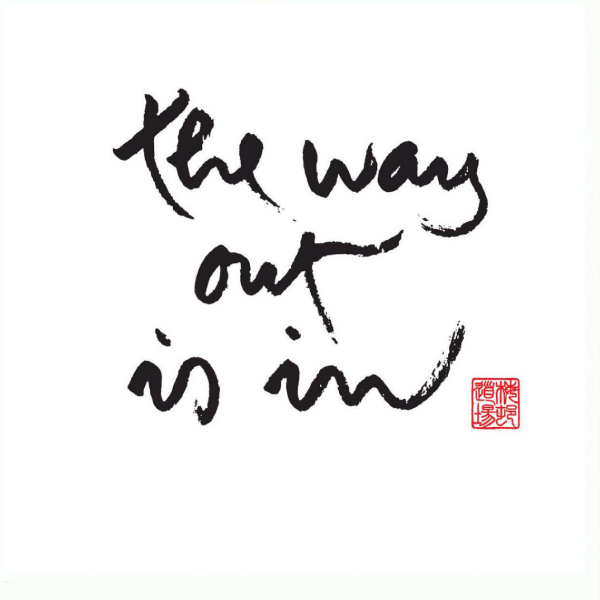
The bell rings again, as Thich Nhat Hanh reminds us that:
Echoes again (and where did they begin? Or do they echo through everything? The music of the spheres?) in Nishnaabeg writer, thinker, musician and activist Leanne Betasamosake Simpson's Theory of Water: "For Nishnaabeg, the way we live makes the world" (Theory of Water, p121).
Simpson settles down in the chasm, in the midst of settlers "destroying history, yes - but also destroying the present, and the potential for Nishnaabeg futures" (p133). And while sitting there, she recognises "that you are what you do, and that what you do every day matters because over time this accumulates into the structure of one’s life and the structure of a community’s life" (p136).
This is what I was beginning to gesture at in my book, Living Democracy, when I wrote of "living into being the world we need". There's so much more to it than I realised at the time.
And there is so much joy and grief and beauty and devastation and foreclosure and possibility in Simpson's writing, coming together for me in the observation that "Life is made in the interstitial spaces between beings" (156).
Which brings us back to Arendt, and her interesting proto-environmentalism, in 1958:
The earth is the very quintessence of the human condition, and earthly nature, for all we know, may be unique in the universe in providing human beings with a habitat in which they can move and breathe without effort and without artifice. The human artifice of the world separates human existence from all mere animal environment, but life itself is outside this artificial world, and through life man remains related to all other living organisms. (The Human Condition, p2)
The claim to separation (as Vanessa Machado de Oliveira also reminds us) is the beginning of the problem.
Life is in the relationships, in the spaces between.
We think our freedom is in a future to be found. We think our power and agency are in forcing that future.
But freedom, agency, and power can only be found here, in this in-between - in between people, and in between people and the rest of life, and in between past and future, if we dare to settle down here as nonsovereign beings and make the world anew each day.
**
The wattle is blooming.
It stops me in my tracks.
It dares me to love the world.
It reminds me to grieve how broken the world is.
And it dares me to love the world, anyway.
Only by choosing to do so - deliberately deciding to settle down in this "non-time-space" of the present - can we truly find our freedom to act together, and to bring something genuinely new into the world.
The truly revolutionary act is to stop planning the revolution and to begin to be the people we need to be for the world we need.
So wattle we do about that?