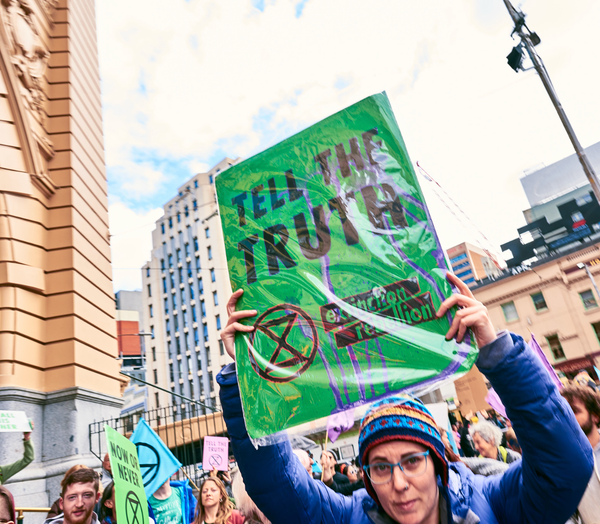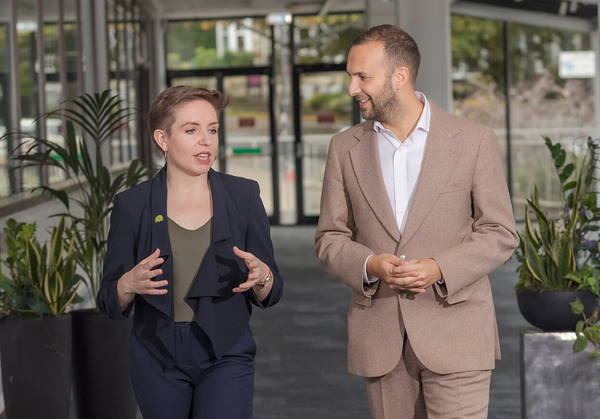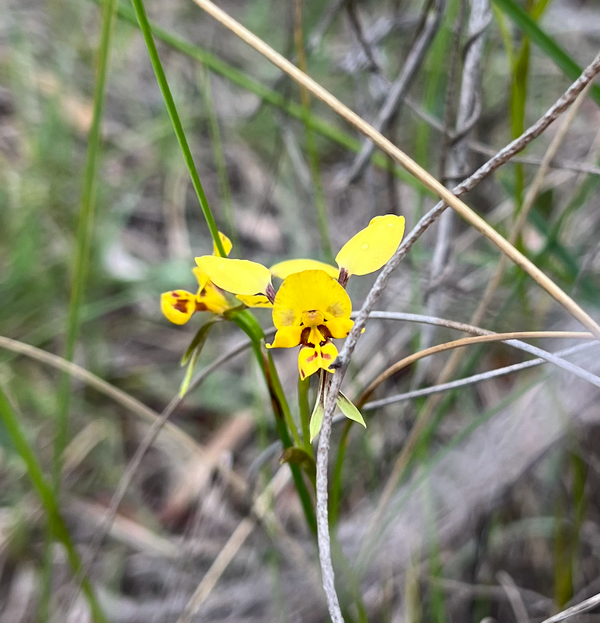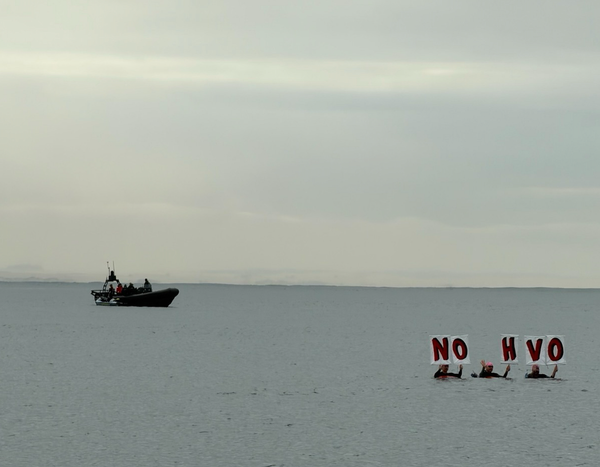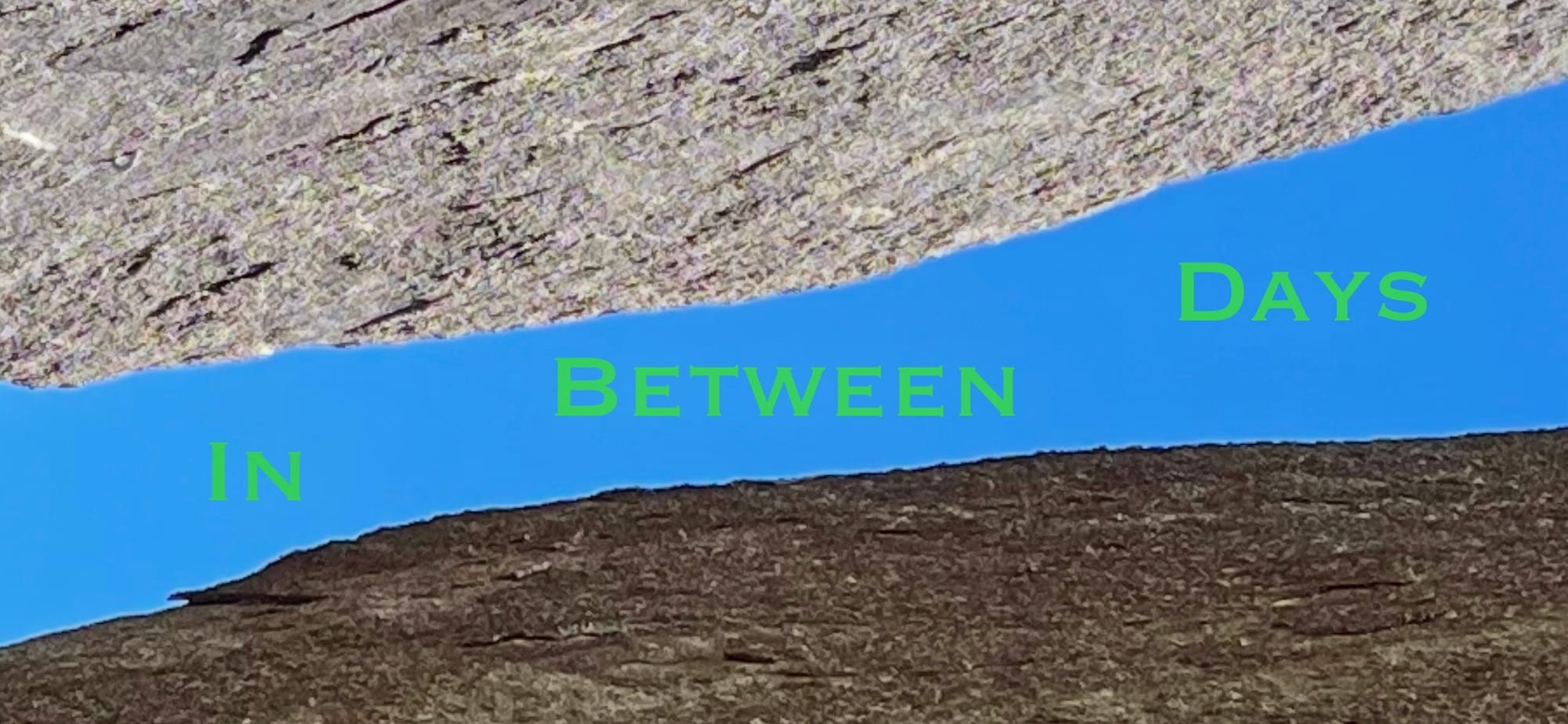
"No permission. Not a protest. We're just here."
On the transformative experience of being on country
"What started as a task to stop a mine has evolved into a quest for freedom for my clan with the now 5 year old Autonomous tribal clan estate of Waddananggu." Gurridyula (Coedie) MacAvoy
Time moves differently on country.
When you sit and really listen - to elders; to the birds; to the air moving around you - and you allow yourself to simply be there, to simply be... time begins to shift.
I've been thinking of it as something like a present continuous.
We are (inter)being on country.
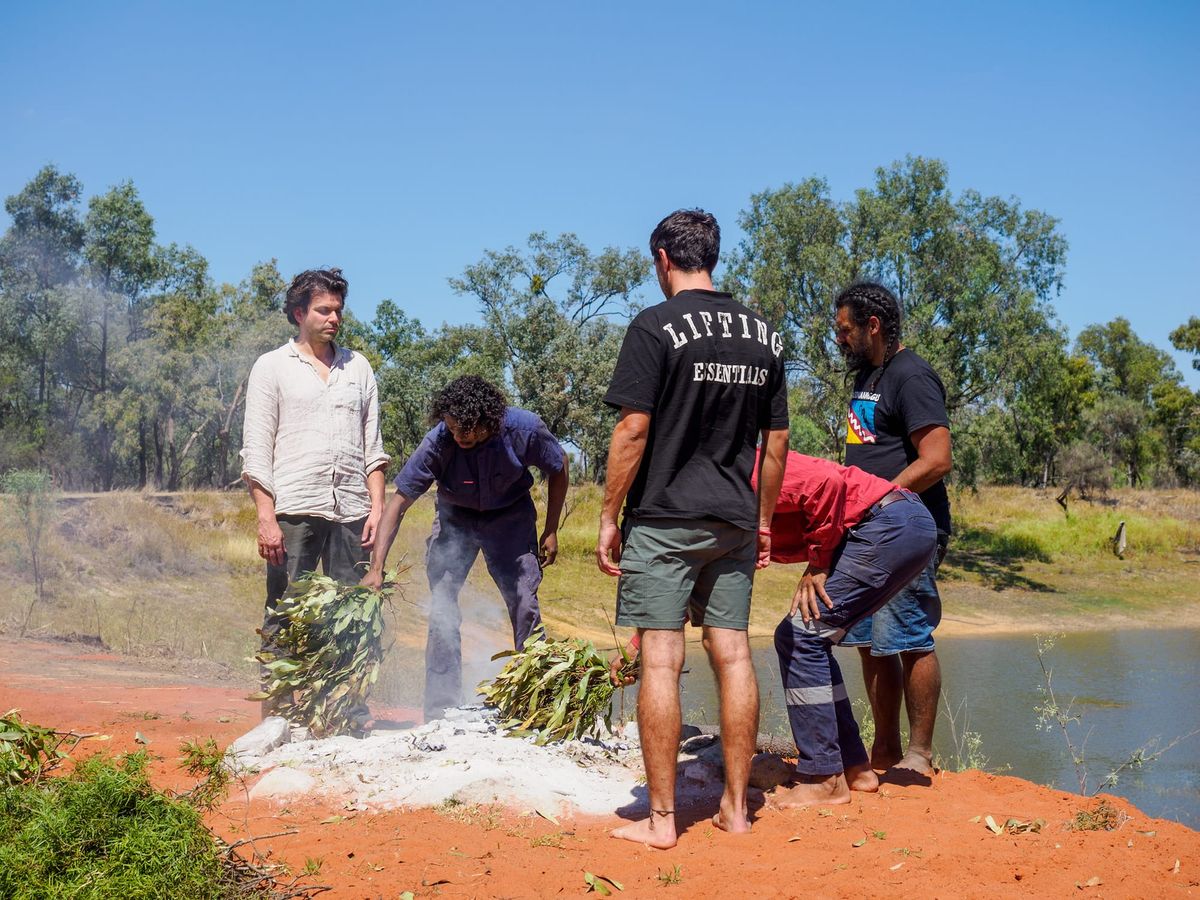
We are gathering together, kilometres away from the operational Adani Carmichael coal mine, close enough to hear its rumbling through the night, feeling the heat, knowing the threat, understanding the urgency... and the urgency is transforming from feverish action into staunch determination.
We are still here.
We aren't going anywhere.
Practising and sharing ancient culture, living on country, mixing DNA with country, caring for country in a loving mutual relationship, Gurridyula and his family are interrupting the flow of modern time and creating a new present continuous.
**
You probably know some of the back story.
When Adani (now called Bravus, but same same) first proposed to build a massive new coal mine northwest of Clermont in central Queensland, Wangan and Jagalingou man, Adrian Burragubba, stood up to say no - not on our country. The corporation did what they always do and used money and power to split the Traditional Owners. And Uncle Adrian kept campaigning - travelling the country and the world to build the Stop Adani campaign, trying to change regulatory and financing decisions.
It hasn't fully worked yet. Part of the mine is operational. But it is far smaller and less destructive (and less profitable) than it would have been without his efforts.
On the 26th of August each year, marking the anniversary of Uncle Adrian's grandfather's forced removal from his country at gunpoint, the family has been holding ceremony on country in various ways. One year, they occupied the road, lighting a fire and holding off trucks. One year, they organised a pushbike ride - the Tour de Carmichael.
Five years ago, Adrian's son, Gurridyula, chose a spot on a berm next to the access road, across from the operational mine site, and right where the mine was slated to expand to, and lit a fire. He said "I'm conducting ceremony here. This is a sacred fire. I'm not leaving".
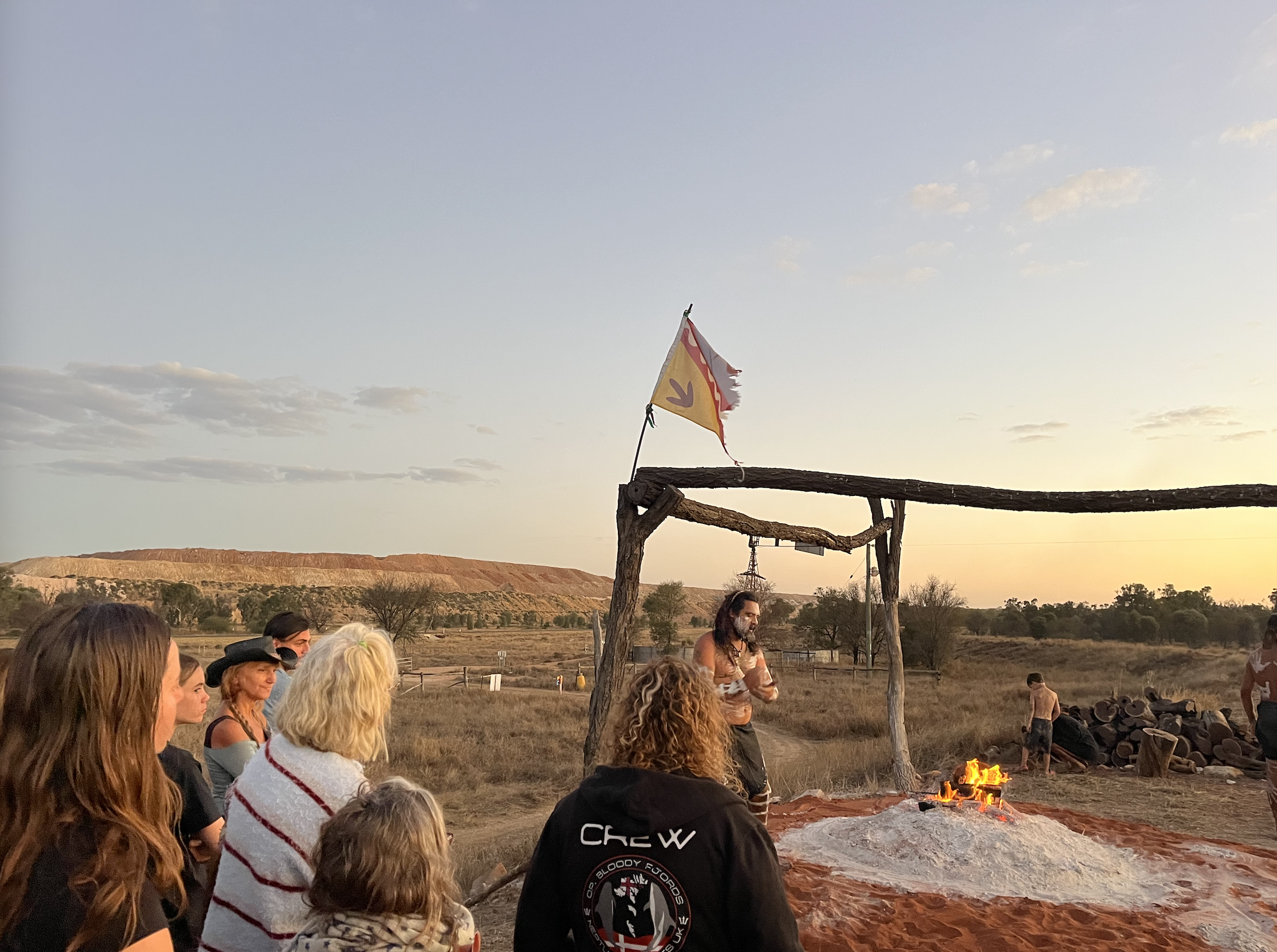
He trolled security hilariously, thumbing his nose at them.
He sent friends out to say, "oh, nah, sorry, Gurridyula's only speaking Wirdi today. If you want to talk to him, you'll need to get a translator."
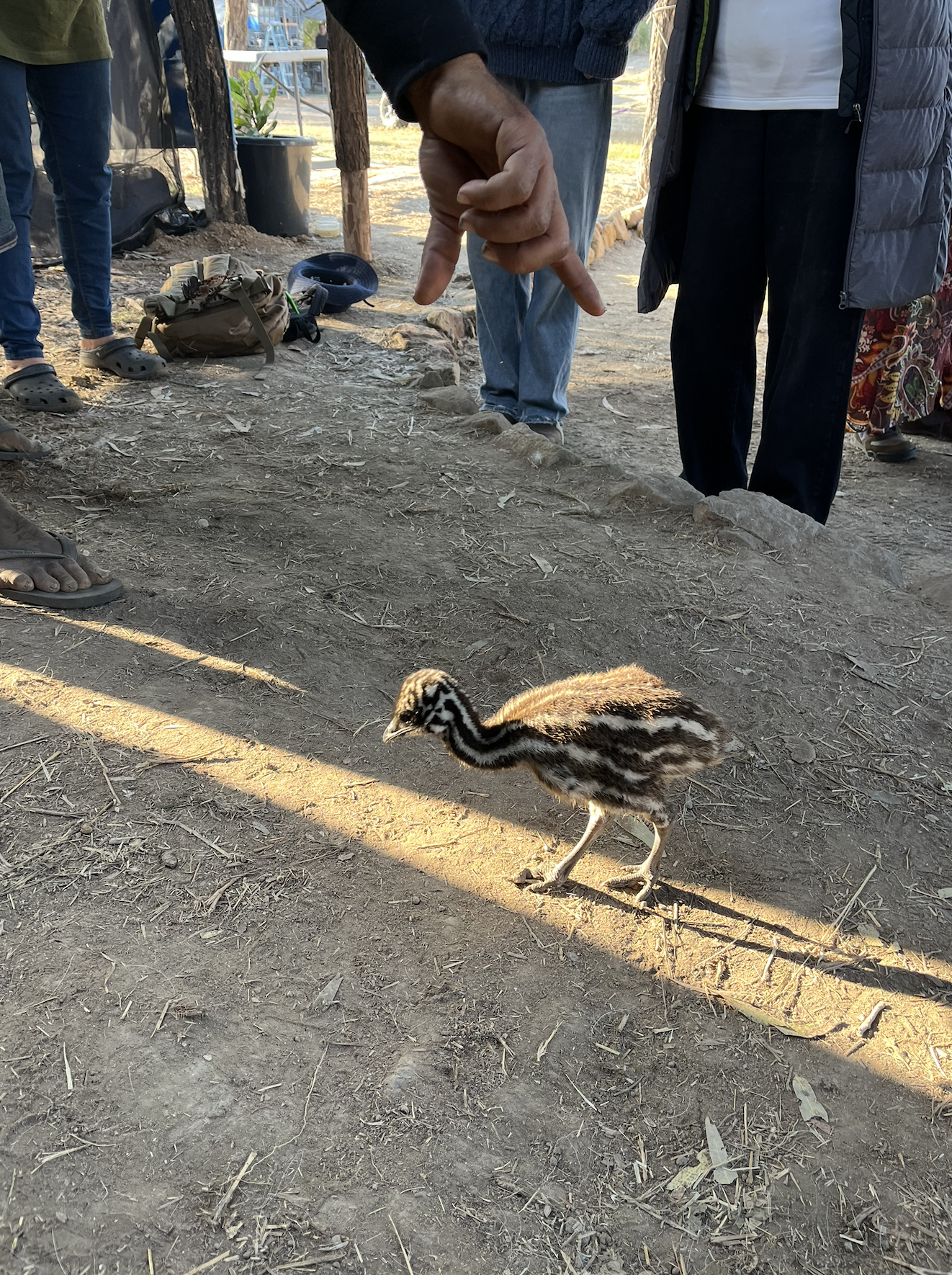
The trickster emu runs strong in this family. Amidst the tragedy and the loss and the determination, the giggling and laughter echoes across country constantly.
The family made a set of rules, agreeing not to leave the fire. Literally, for over 400 days, at least one of them was inside the circle. Or at least had a toe in the circle when reaching out to get something. Or lay half outside, under a shelter in the rain, with one leg inside the circle. Swapping out brother for sister for cousin.
As Gurridyula told us, "Doing it yourself is hard. Doing it with family is easy."
Actually, his brother interrupted, saying "is ever harder!" Cue more rollicking laughter.
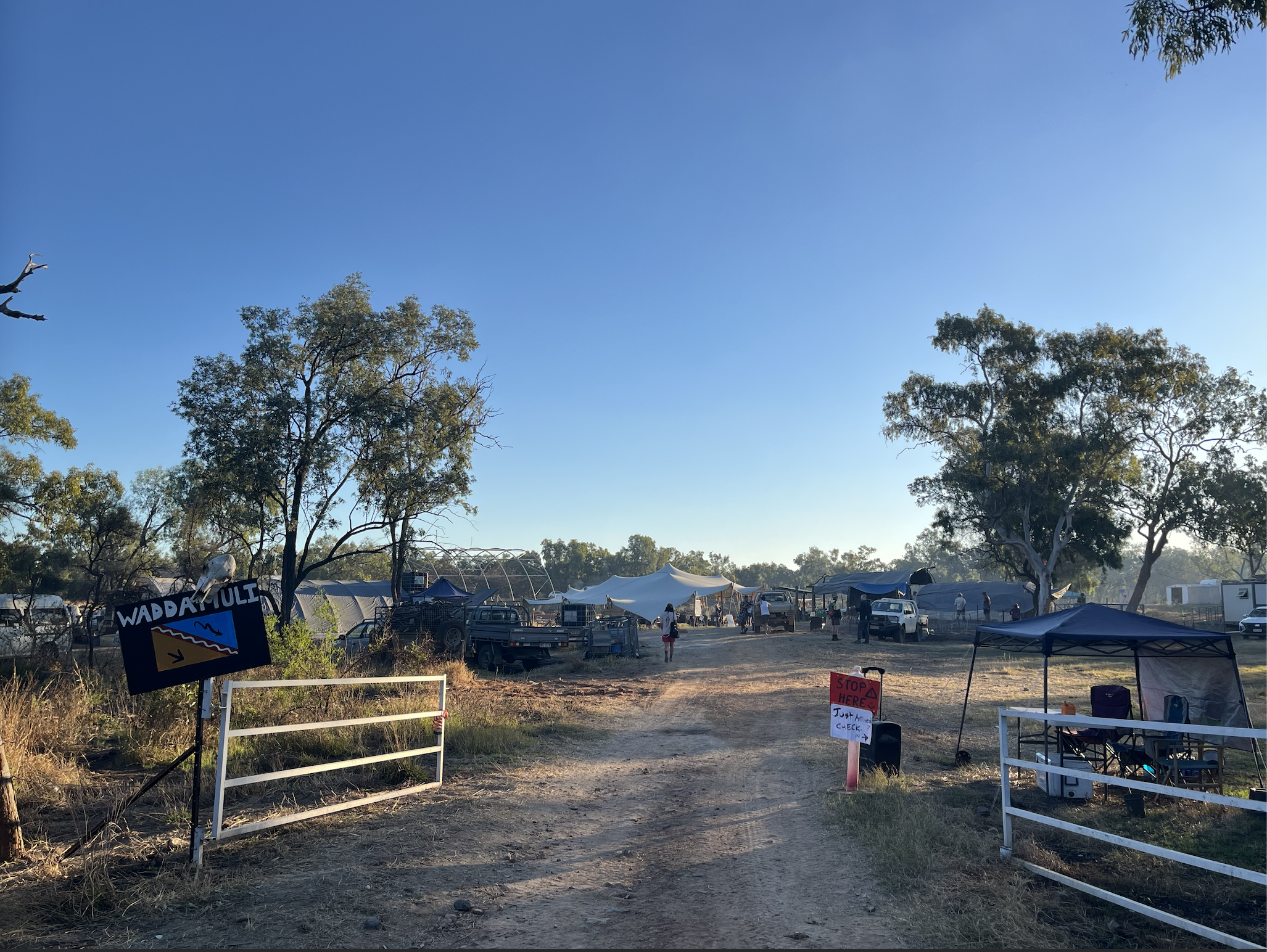
After a year and a bit, they shifted the sacred fire away from the road, to a spot by a waterhole, declared the whole site to be ongoing ceremony - Waddananggu, “the talking” - and they are still there.
Five years on, some 200 of us gathered to celebrate Waddananggu Mala. Mala means five. It also means hand.
"Every hand is welcome as Waddananggu is an inclusive community. We gather every year to build and to celebrate Waddananggu's unique Wagalbara culture and peaceful reoccupation and protection of Wangan and Jagalingou homelands with our new community members."
**
I have so many thoughts about what I experienced and learned at Waddananggu Mala. From Gurridyula and Uncle Adrian. From the extraordinary elders from across the continent who joined the gathering - people like Aunty Ruth Langford, Uncle Jim Everett, and Uncle Mala Neal. From other participants. From country itself.
I'm trying to work out how to both simply sit with the experience and to think about it in interplay with my research and developing ideas. Without going too deep yet, here are a few observations.
The transformative practice of just being
What happens when we move from campaigning for something to be done to simply getting on and doing it? Indeed, what happens when we move from doing it to being it?
If you've been reading my writing here for a while, you'll know this is a core question for me, drawing on Hannah Arendt's idea of power emerging from people coming together to act in concert - and that when this happens, we become free to change the world.
We watched a few old videos of the evolution of this experiment, reminding ourselves where it came from. And it's astonishing to see close up the transformation of the people involved. As campaigners, they were staunch and proud but fundamentally powerless. And angry in their powerlessness. Now, conducting cultural practice on their country, they are brimming with power - joyful, caring, collective power. And country knows it, and responds. And, through events like this, they share this transformation with us.
Uncle Mala told us of how an elder instructed him, as he reached a position of leadership, to let go of his pain and anger. Not to stop feeling it. Not to forget it. But to step into his leadership he needed to stop carrying it with him constantly. This is the spirit I observed throughout the celebrations.
Gurridyula was at pains to say, repeatedly, that this is not a protest. What they are doing is being. They are turning cultural heritage into cultural present, making the world anew through cultural burning, birthing trees (embedding placentas of newborn family members in living trees), digging ash into the soil, and through their constant presence.
He was also at pains to point out that at no point has he asked permission. Because, as he baldly says, "if I don't consent to their rules and regulations, they can't deny me permission."
This isn't about building power to get someone to do something. This is about cultivating collective power by making the world together - by learning to be who we need to be together.
Interrupting the flow of modernity and history
Again, core to my thinking is Arendt's description of how we get swept up in the tide of history, the idea of inevitability. Only through experience - and thinking together about that experience - can we interrupt that flow and create the space for something new to emerge.
Uncle Adrian articulated a version of this when talking about Gurridyula's refusal to speak English to police and security. He talked about how colonialism insists on describing the colonised, but "we are a self-describing people". Using language, using cultural practice, refusing to consent or ask permission, "we are re-establishing the fact that they don't own us." The description of Waddananggu as a "reoccupation" follows this path.
The amazing Ruth Langford echoed this, telling us of how she and Uncle Jim have told the Tasmanian government - "You don't have jurisdiction over me. Come and get me." "And they haven't yet!"
Along these lines, Gurridyula nailed something I've been saying for a while, articulating to us that "the majority of humans don't feel responsible for nature because they've delegated it to government." By taking back our caring relationship with nature, by exercising it and learning to be nature, we transform ourselves.
Stepping from there into hilarity, he suggested that young Indigenous men who get an adrenaline rush from stealing a car should try the incredible rush you get from stealing your own country back!
The Trickster is surely the great interrupter! What a remarkable stimulant to transformation!
Improvising your way to change through practice
Another theme I've been exploring is the shift from transition - a controlled, determined pathway from here to there - to transformation - an open, emergent process of changing shape.
Gurridyula, cackling, inverted the old "if you don't plan, you won't succeed", telling us "if you plan, you might fail, but if you don't plan, you can't fail!"
"We've just been winging it the whole time!"
There's an improvisatory genius here, based on deep cultural practice, deeply embodied values, deep connection to country.
As Uncle Mala said "You can live in your [native] title. We stand in our spiritual values."
If we know how to relate to each other and to country, we can listen to what's going on around us, hear the new harmonies and counter-rhythms as they appear, and play with them, creating something exciting, unpredictable, and beautiful. We don't need to follow rules. We need to have the skills to do what needs to be done in each moment as we become the people we need to be.
**
We were treated to an amazing evening of dancing at the Corroboree circle near the road, opposite the mine. A few of us decided to walk the 4km back to camp while others danced late into the night.
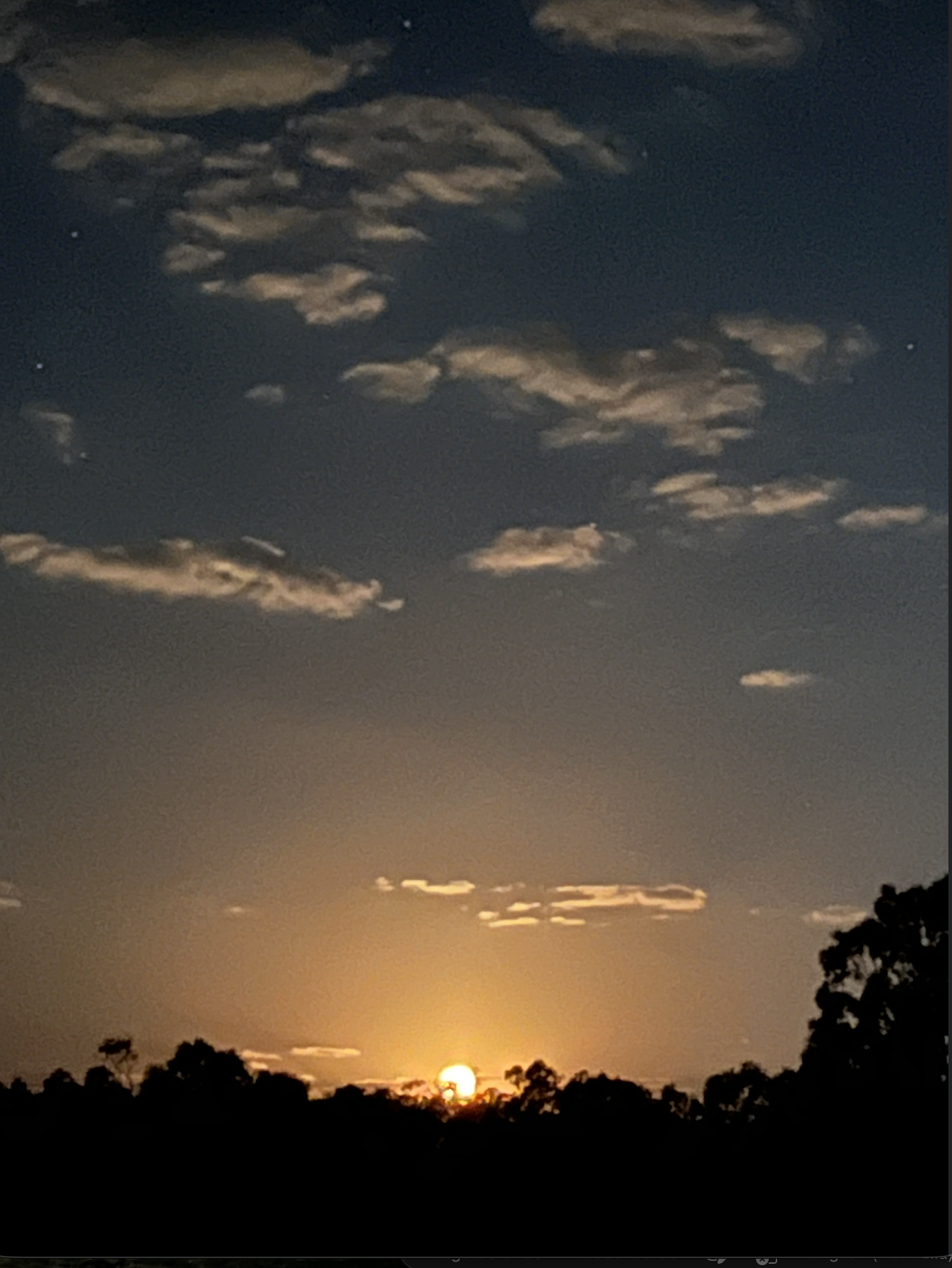
The walk, under the bright full moon, was stunningly beautiful. And we noticed, as we got further from the road and deeper into country the custodians have stewarded with such care for five years now, the temperature dropped by several degrees.
The land is humming with life. It holds moisture. It cools itself, and it cools those who care for it.
It’s being alive.
Present continuous.
PS: Please consider becoming a regular donor to the cultural custodians doing this extraordinary work.
PPS: Thanks to my Rising Tide friends, who made the incredibly long bus ride so much fun, filled with wonderful discussions and singing and joy.